
Introduction
Thyroid ultrasound is a safe and painless test that uses sound waves to create pictures of your thyroid gland. This test plays a key role in checking thyroid health. It helps doctors find thyroid nodules and other thyroid disorders early. Because ultrasound imaging is non-invasive, it is often the first step in thyroid nodule diagnosis. If you are searching for a “thyroid ultrasound near me,” you are taking a smart step toward better thyroid care.
What Is a Thyroid Ultrasound?
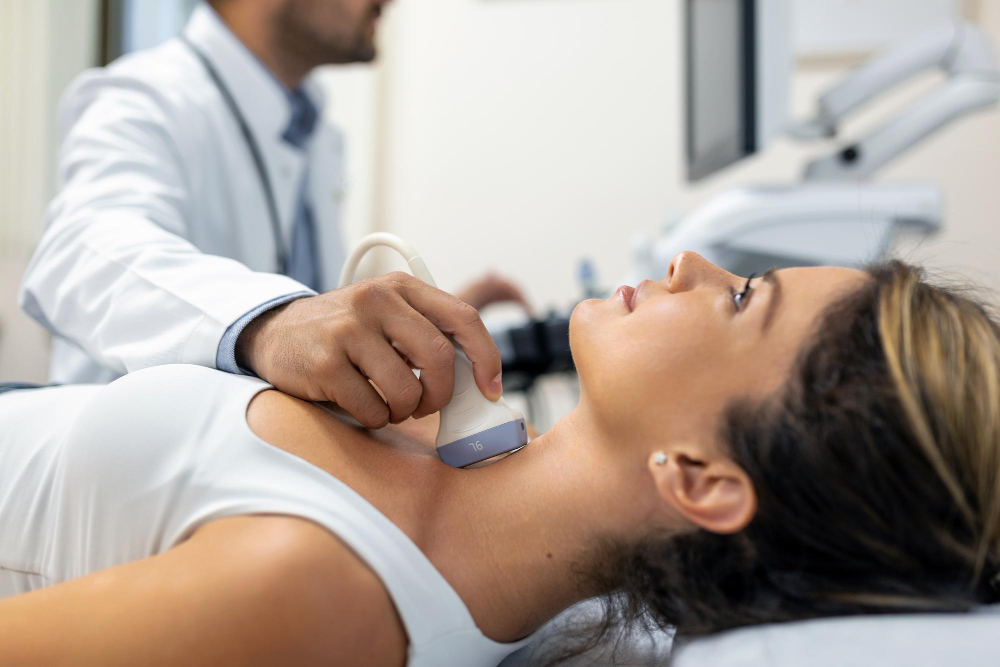
A thyroid ultrasound is a type of scan that looks at the thyroid gland in your neck. The thyroid is a small, butterfly-shaped gland that controls many body functions. During the scan, a device called a transducer sends sound waves into your neck. These waves bounce back and create images on a screen. As a result, doctors can see the size, shape, and texture of your thyroid.
Why Is Thyroid Ultrasound Performed?
Doctors use thyroid ultrasound for many reasons. For example, it helps:
Because the test is quick and does not use radiation, it is safe for most people.
How Does Thyroid Ultrasound Detect Nodules?
Thyroid ultrasound imaging can spot even small nodules that a doctor may not feel during a physical exam. The scan shows the size, shape, and number of nodules. In addition, it helps doctors see if a nodule is likely to be harmless or needs more tests. For example, solid nodules may need closer follow-up, while fluid-filled ones are often less risky. This makes ultrasound a key tool for safe thyroid scans and early thyroid nodule diagnosis.
Common Thyroid Conditions Detected by Ultrasound
Thyroid ultrasound can help find several thyroid conditions, such as:
Because ultrasound is so detailed, it helps doctors decide the next steps for your thyroid health.
What to Expect During the Procedure
Getting a thyroid ultrasound is simple and stress-free. First, you will lie on your back with your neck slightly stretched. Then, a technician will put a small amount of gel on your neck. This gel helps the sound waves travel better. Next, the transducer moves over your skin to capture images. The scan usually takes about 15 to 30 minutes. After the test, you can return to your normal activities right away.
Benefits and Limitations of Thyroid Ultrasound
There are many benefits to thyroid ultrasound, such as:
However, there are some limits. For instance, ultrasound cannot always tell if a nodule is cancerous. Sometimes, more tests are needed. Even so, it remains a key part of thyroid nodule diagnosis and thyroid disorder care.
When to Consult a Doctor
If you notice a lump in your neck, feel pain, or have trouble swallowing, you should see a doctor. Also, if you have a family history of thyroid disorders, regular checks may help. Early detection can make treatment easier. Therefore, ask your doctor if a thyroid ultrasound is right for you. Many clinics offer “thyroid ultrasound near me” services for easy access.
Consult a healthcare specialist for personalized advice about thyroid health and ultrasound screening.